 Beau
BeauWhat’s the Best Marketing Strategy for Electricians?
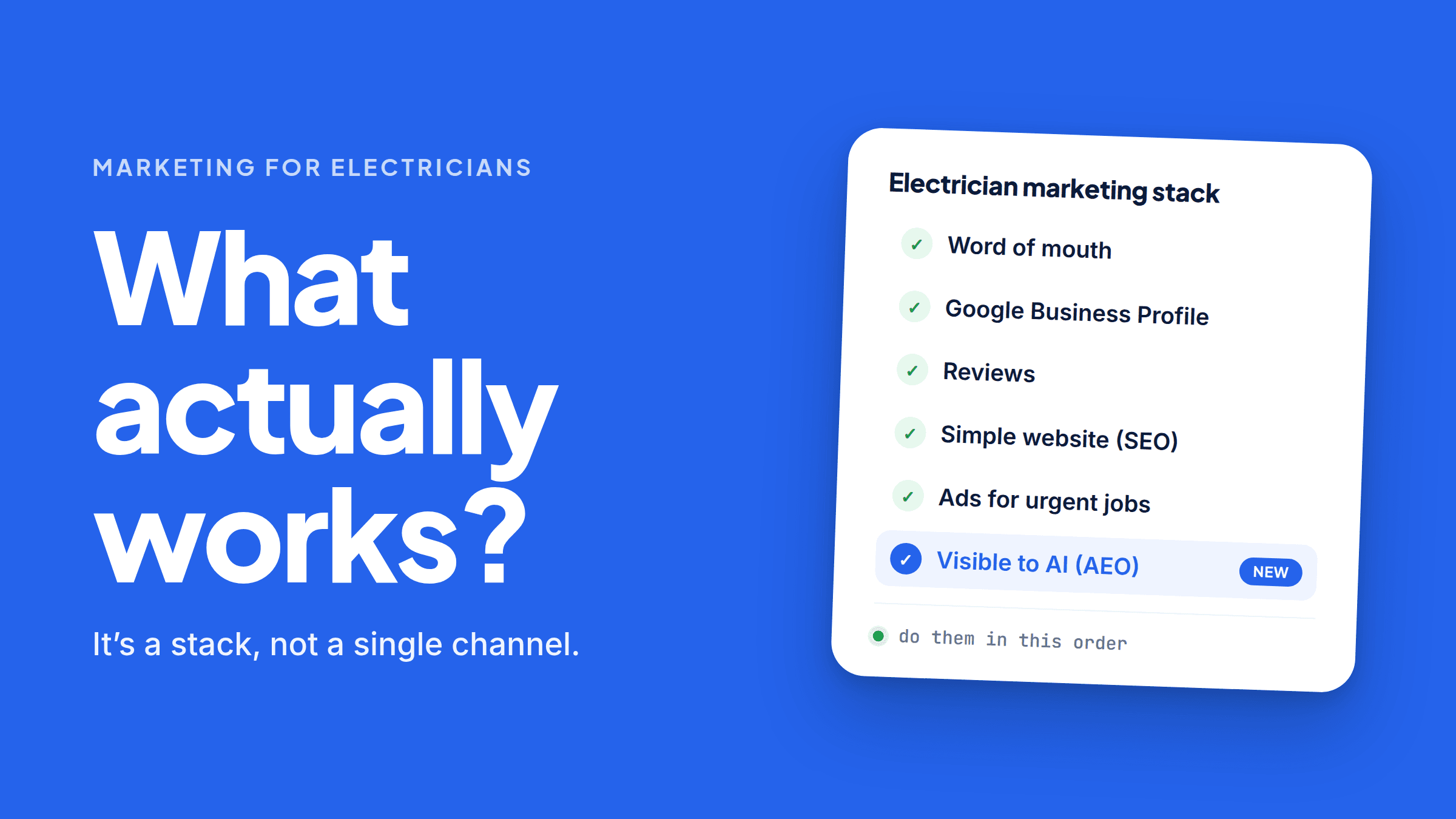
There isn’t one. There’s a short list that works together — and most electricians are only doing two of them.
If you own an electrical business, you’ve probably been pitched every marketing idea under the sun. Postcards. Radio. A $4,000 website. A guy who “does SEO.” A different guy who swears by Facebook ads.
Here’s the honest answer: there is no single best marketing strategy for electricians. There’s a handful of things that work, and the businesses that grow do most of them at a basic level rather than one of them perfectly.
Below is that list, roughly in the order you should tackle it.
1. Word of mouth (still number one)
The best customer you’ll get this year will come from someone saying your name out loud. “Call the guy who did our panel — he showed up on time and didn’t upsell us.” That lead arrives pre-sold. They’re not comparing you to four other electricians. They just want to know when you can come.
The mistake most electricians make is treating referrals as luck. They’re not. You can make them happen more often:
- Ask. At the end of a job that went well, say, “If you know anyone who needs an electrician, I’d appreciate the referral.” Most people never ask.
- Leave something behind. A magnet or a card with your number on the panel door. The next homeowner will find it too.
- Reward it. A small thank-you — a gift card, a discount on the next visit — for customers who send you work.
- Be easy to recommend. Answer the phone. Show up when you said. Clean up. Boring, but it’s the whole game.
Every other strategy on this list is really just a way to get more of this.
2. Google Business Profile
When someone types “electrician near me,” the map with three businesses at the top is where most of the calls go. Getting into that box is free. It’s your Google Business Profile.
Fill it out completely: service area, hours, phone, photos of real work (not stock images), and the services you actually offer. Post to it now and then. Pick the right primary category (“Electrician,” not “Contractor”). Keep your name, address, and phone number identical everywhere online.
For a local service business, this one listing usually brings in more calls than the website does. Treat it like a storefront.
3. Reviews
Reviews do two jobs. They help you show up higher on Google, and they close the customer once they’ve found you. A profile with 8 reviews loses to one with 80, even if you’re the better electrician.
Make asking part of the job. Text a review link the same day, while the customer is still happy the lights work. Ask every customer the same way — screening for the ones you expect to be happy is review gating, and Google actively enforces against it. Reply to every review, including the bad ones, calmly and briefly. Aim for a steady trickle rather than a burst.
4. A simple website that says the right things
You don’t need a fancy site. You need a fast one that answers the questions people are actually asking:
- What do you do? (Panel upgrades, EV chargers, generator installs, service calls, and so on.)
- Where do you work? Name the towns.
- Are you licensed and insured? Say so, with the license number.
- How fast can you get here? Do you do emergency calls?
- Roughly what does it cost?
That’s SEO at its most basic: clear pages, one topic per page, your towns and services written in plain words. If you want the full structure, seven pages cover it. SEO is the foundation of being found online. Everything below builds on it.
5. Paid ads for urgent work
Some electrical jobs can’t wait. A dead panel, a burning smell, a house with no power. Those customers aren’t reading blog posts. They’re searching and calling the first credible result.
That’s where Google Local Services Ads and search ads earn their keep. You pay per lead or per click, you only run them for the urgent, high-value jobs, and you turn them off when you’re booked out. Keep the budget small until you know what a lead costs you and what it’s worth.
Facebook and Instagram ads work less well for urgent jobs but fine for planned ones like EV charger installs or generators, where a homeowner is thinking about it for weeks.
6. Being visible to AI (AEO)
Here’s the newer one, and it’s the one most electricians haven’t heard of yet.
More and more people skip Google entirely and ask an AI instead. “Who’s a good electrician in Portsmouth for an EV charger?” ChatGPT, Perplexity, or Google’s own AI answers with two or three names. Whoever gets named gets the call. Nobody clicks a list of ten links.
Making sure you’re one of the names is called AEO, answer engine optimization. If SEO is the foundation, AEO is the next floor up. It doesn’t replace your website or your Google profile. It makes sure the AI can read them.
In practice, that means three things:
- Answer real questions on your site, in plain text. “Do you install EV chargers?” “Do you do emergency calls on weekends?” “How much does a panel upgrade cost?” A straight answer under each one.
- Make sure the AI can actually see it. This is the catch. Many FAQ plugins and page builders load answers with JavaScript, and AI crawlers mostly don’t run JavaScript. The page looks fine to a person and is blank to the AI. Your answers need to be in the plain HTML of your own site.
- Check whether it’s working. Ask a few AI tools the questions your customers would ask and see whose name comes back. If it’s your competitor’s, you know what to fix.
It’s early, which is the point. Most electricians in your area aren’t doing this yet, so the bar to get named is low. There’s a fuller walkthrough for electricians here.
7. Partnerships and the trades network
Realtors, home inspectors, general contractors, HVAC companies, property managers. These people meet homeowners who need an electrician before the homeowner knows it. A couple of real relationships here can feed you steady work for years. Buy the coffee. Refer them back.
8. Vehicle wrap and yard signs
Old-school, cheap, and it works. A clean wrap on a van that parks in driveways all day is an ad your neighbours see every week. A yard sign left up for a few days after a job does the same. These won’t make the phone ring on their own, but they make your name familiar, and familiar names get picked.
So what’s the actual strategy?
Do them in this order:
- Free and fast: Ask for referrals, finish your Google Business Profile, start collecting reviews. A weekend of work.
- The foundation: Get a simple website that names your services and towns and answers the basic questions. This is your SEO base.
- One paid channel: Turn on Local Services Ads for urgent jobs. Watch the cost per lead.
- The next floor: Put your answers on your site in a form AI can read, and check whether AI is naming you.
- Keep it going: Stay in touch with the trades who refer you, and keep asking for reviews.
None of this is complicated. The electricians who win aren’t doing anything clever. They’re doing the basics, consistently, and they’re not invisible in the places customers are now asking.
Frequently asked questions
What is the cheapest way for an electrician to get customers?
Word of mouth, your Google Business Profile, and reviews are all free. Together they usually bring in more work than any paid channel. Start there before spending money on ads.
Do electricians really need a website?
Yes, but a small one. It should say what you do, which towns you serve, that you’re licensed and insured, and answer the common questions. It’s the thing customers check after they find you on Google or hear your name from a neighbour.
Are Google ads worth it for electricians?
For urgent, high-value jobs like a dead panel or a service call, usually yes. Google Local Services Ads charge per lead and can be turned off when you’re booked. Keep the budget small until you know what a lead costs and what it’s worth to you.
What is AEO and does it matter for electricians?
AEO stands for answer engine optimization. It means making sure AI tools like ChatGPT, Perplexity and Google’s AI can read your site and name your business when someone asks for an electrician. It’s early, so most local competitors aren’t doing it yet, which makes it easier to get named.
How do I know if AI is recommending my electrical business?
Ask ChatGPT, Perplexity, and Google a few questions a real customer would ask, like “who installs EV chargers in [your town].” See whose names come back. If yours doesn’t, the fix is usually clear answers on your site in plain HTML that AI crawlers can read.

Written by
Beau
👋 Hi, I’m Beau. I’ve spent almost 20 years in marketing — long enough to watch the whole game change more than once. I was there when SEO was the answer, then social, then content, and now the biggest shift yet: people asking AI instead of Googling. Somewhere along the way I got tired of watching good small businesses do everything “right” and still stay invisible to the tools that increasingly decide who gets found. That’s why I built FaqFlo — my mission is to help you grow your business in the modern world of AI, so you become the answer, not just another link nobody clicks.
Looking for something else?
Search the archive by title, summary, or the questions a post answers.